
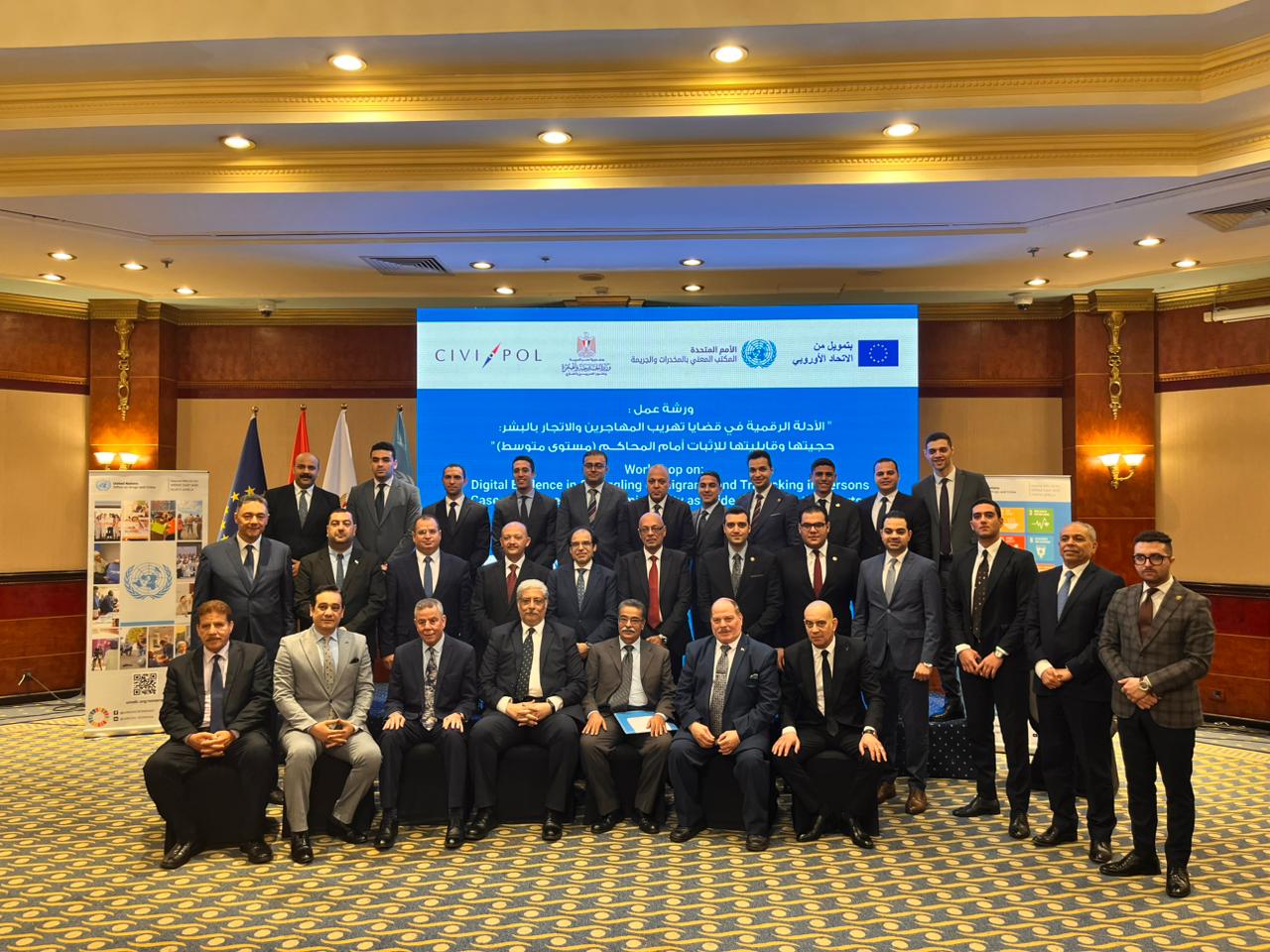
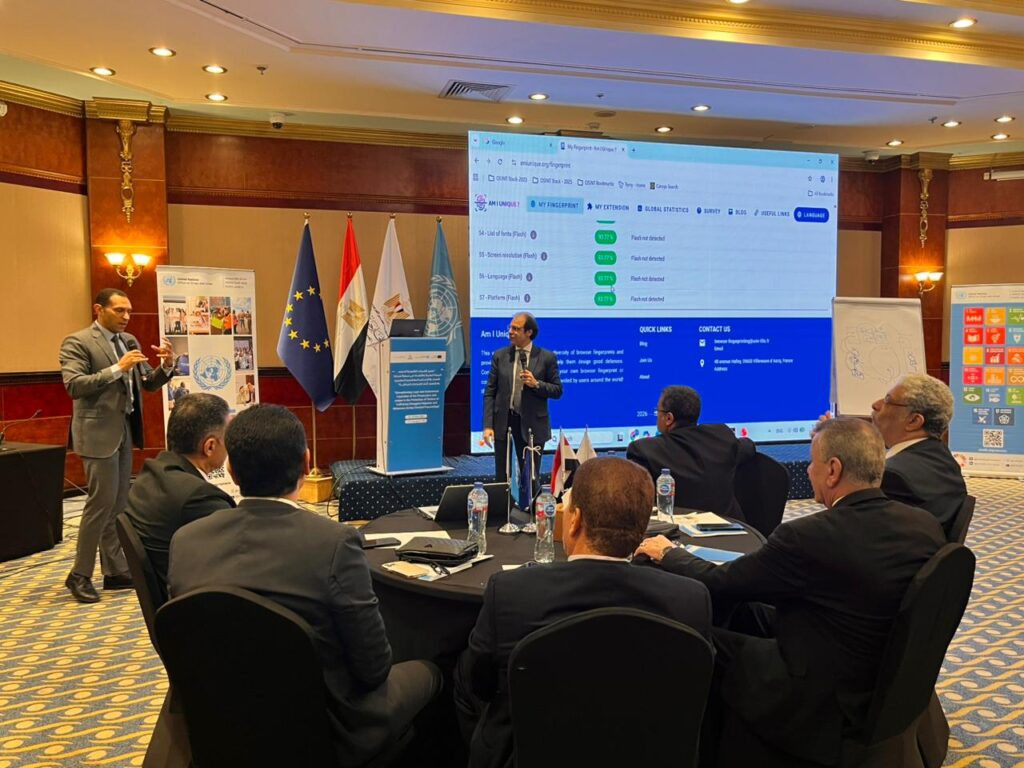
Dr. Mohamed El-Guindy, Senior Cybercrime and Cybersecurity Consultant at UNODC, was honored to deliver sessions during the workshop “Digital Evidence in Migrant Smuggling and Human Trafficking Cases: Admissibility and Probative Value Before Courts,” held in Alexandria, Egypt, from 18–20 May 2026.
Organized by the United Nations Office on Drugs and Crime (UNODC) Regional Office for the Middle East and North Africa under the EU-funded project “Partnership to Combat Migrant Smuggling and Trafficking in Persons in Egypt,” the workshop brought together Public Prosecution members and judges specializing in human trafficking and migrant smuggling cases.
Human trafficking and migrant smuggling remain major forms of transnational organized crime across the Middle East and Africa. As criminal networks increasingly exploit smartphones, social media, encrypted communications, email services, and online platforms to recruit victims, facilitate crimes, and conceal identities, digital evidence has become essential to investigations and prosecutions.
The three-day workshop enhanced participants’ understanding of trafficking and smuggling networks and technology-driven investigative approaches, including Open-Source Intelligence (OSINT), digital investigations, social media analysis, and data analytics.
A key focus was the collection, preservation, assessment, and presentation of digital evidence, including its admissibility, authenticity, integrity, and probative value before courts. Through practical exercises and real-world case studies, participants examined challenges associated with technology-enabled criminal activity, supporting victim protection, the rule of law, specialized judicial responses, and efforts to combat criminal networks.