
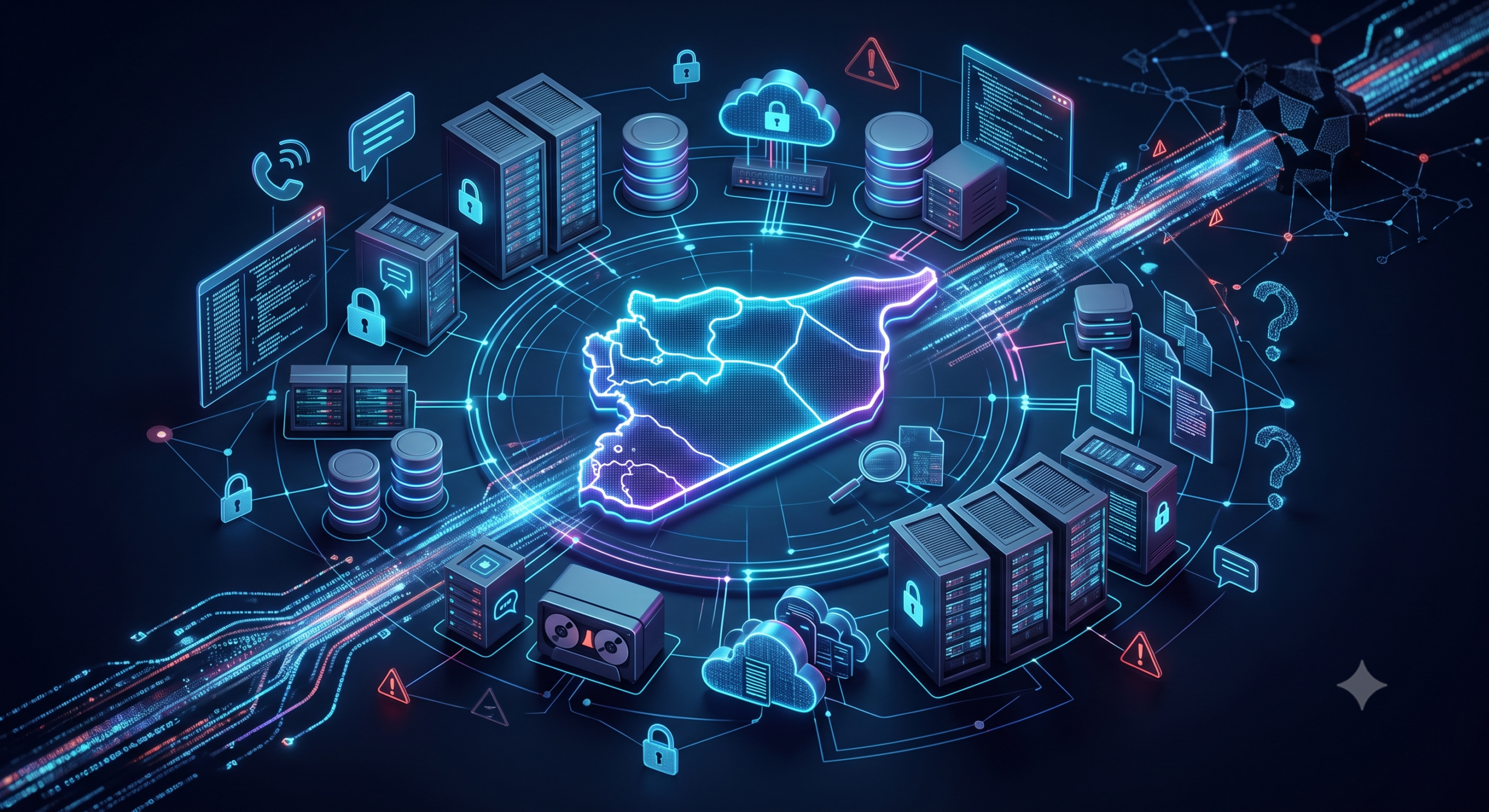
A threat actor on an underground forum claims to have obtained approximately 12 GB of data connected to multiple Syrian government domains and systems.
According to the claim, the alleged archive includes databases, source code, configuration files, SSH-related material, backups, documents, images, and communications.
The actor further claims that the data contains more than 66,000 images, approximately 300 MB of phone-message data, and hundreds of phone numbers. Several Syrian government domains are reportedly referenced, including systems related to aviation, local administration, and other public-sector infrastructure.
However, the claim has not been independently verified. The authenticity, source, date, freshness, and government attribution of the alleged data remain unclear.
The Danger of Recycled Data
This caution is particularly important because Syria has experienced significant data leaks in the past.
In 2016, a documented breach involving outdated Joomla installations reportedly exposed approximately 43 GB of data, including server credentials and administrative passwords.
More recently, Syrian authorities warned that some alleged “new” government cyberattacks circulating online were actually older leaks that had been republished.
This demonstrates an important threat-intelligence principle: the size of an alleged dataset does not prove that the information is newly stolen.
Threat actors may exaggerate, recycle, or combine previously leaked material to gain credibility, attract attention, influence narratives, or create panic. While the specific motive behind this claim remains unconfirmed, the potential for misdirection, misinformation, and unnecessary panic is significant.
Why This Claim Matters
If the alleged material is authentic and current, the combination of databases, source code, configuration files, backups, communications, and access-related information could provide attackers with valuable insight into targeted systems and potentially create additional security risks.
The concern is therefore not simply the reported 12 GB.
It is what the data may contain, whether it is current, and whether it can provide access to additional systems.
Guidance for Security Teams
Organizations should not focus only on their public-facing websites.
Security teams should review their entire attack surface, including:
- Forgotten or legacy systems
- Exposed backups
- Source-code repositories
- Configuration files
- Credentials and secrets
- SSH keys
- Internet-facing services
Teams should also verify whether any allegedly exposed credentials or access mechanisms remain valid and determine whether the information is new or recycled.
A Message to the Cybersecurity Community
For the wider public, the lesson is simple: do not share sensational breach claims as confirmed facts before reliable evidence is available.
For cybersecurity professionals, the incident is a reminder that forgotten digital assets can become valuable entry points for attackers.
At this stage, the reported Syrian government leak should be treated as a significant but unverified threat-actor claim, pending independent verification.