
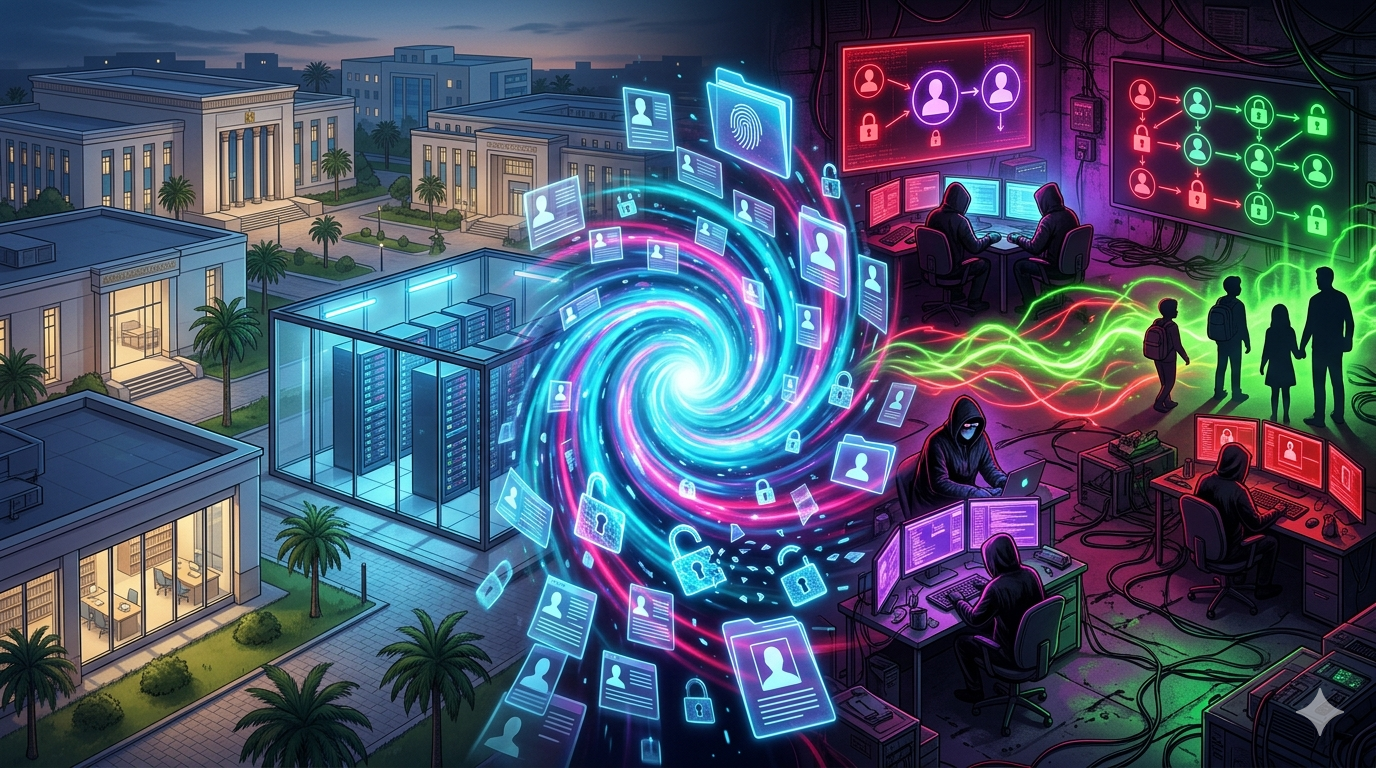
Cyber threat monitoring channels have reported claims made by a threat actor identified as “Revesky” regarding an alleged data breach involving systems associated with Egypt’s Ministry of Education.
According to the claims, the alleged dataset includes approximately 22.6GB of information, reportedly containing records associated with millions of students, teacher and staff information, and alleged access to administrative systems.
At the time of publication, these claims remain unverified, and there has been no official confirmation regarding the authenticity, scope, or impact of the alleged incident. As such, the reported information should be treated as unconfirmed until further evidence or official statements become available.
While the validity of the claims has not been established, cybersecurity experts emphasize that the potential risks associated with educational data breaches extend beyond the exposure of academic records. Personal and institutional information can be exploited by threat actors to conduct phishing campaigns, identity theft, impersonation schemes, fraud, and cyber extortion attempts.
One of the most significant concerns following any potential data exposure is credential reuse. If individuals use the same password across educational platforms, email services, social media accounts, or other online services, a compromise of one account may increase the risk of unauthorized access to multiple accounts and services.
Cybercriminals frequently use personal information obtained through breaches to create convincing fraudulent communications. These messages may impersonate legitimate educational institutions and request actions such as updating personal information, paying fees, verifying accounts, or clicking on malicious links. Because such messages may contain accurate personal details, they can appear highly credible to recipients.
As a precautionary measure, students, parents, educators, and administrative personnel are encouraged to rely exclusively on official Ministry of Education communication channels and verified websites for information and account-related activities. Unofficial websites, messaging groups, and social media channels may be used by threat actors to distribute fraudulent content or conduct social engineering attacks.
Cybersecurity professionals recommend the following best practices:
- Change passwords regularly and avoid reusing passwords across multiple services
- Enable multi-factor authentication (MFA) wherever available
- Exercise caution when opening links, attachments, or unsolicited messages
- If a suspicious link has been opened, disconnect the device from the network and perform a security scan
- Report suspected phishing, fraud, or extortion attempts to the appropriate authorities
- Avoid responding to or engaging with individuals demanding money or threatening to release information
Experts note that extortion attempts often rely on psychological pressure and fear to influence victims. Individuals are encouraged to verify claims through official channels and seek guidance from trusted cybersecurity and law enforcement authorities when confronted with such demands.
Disclaimer: This statement is based solely on claims reported through cyber threat monitoring channels. The alleged breach has not been independently verified, and no official confirmation has been issued regarding the existence, scope, or impact of the reported incident.