
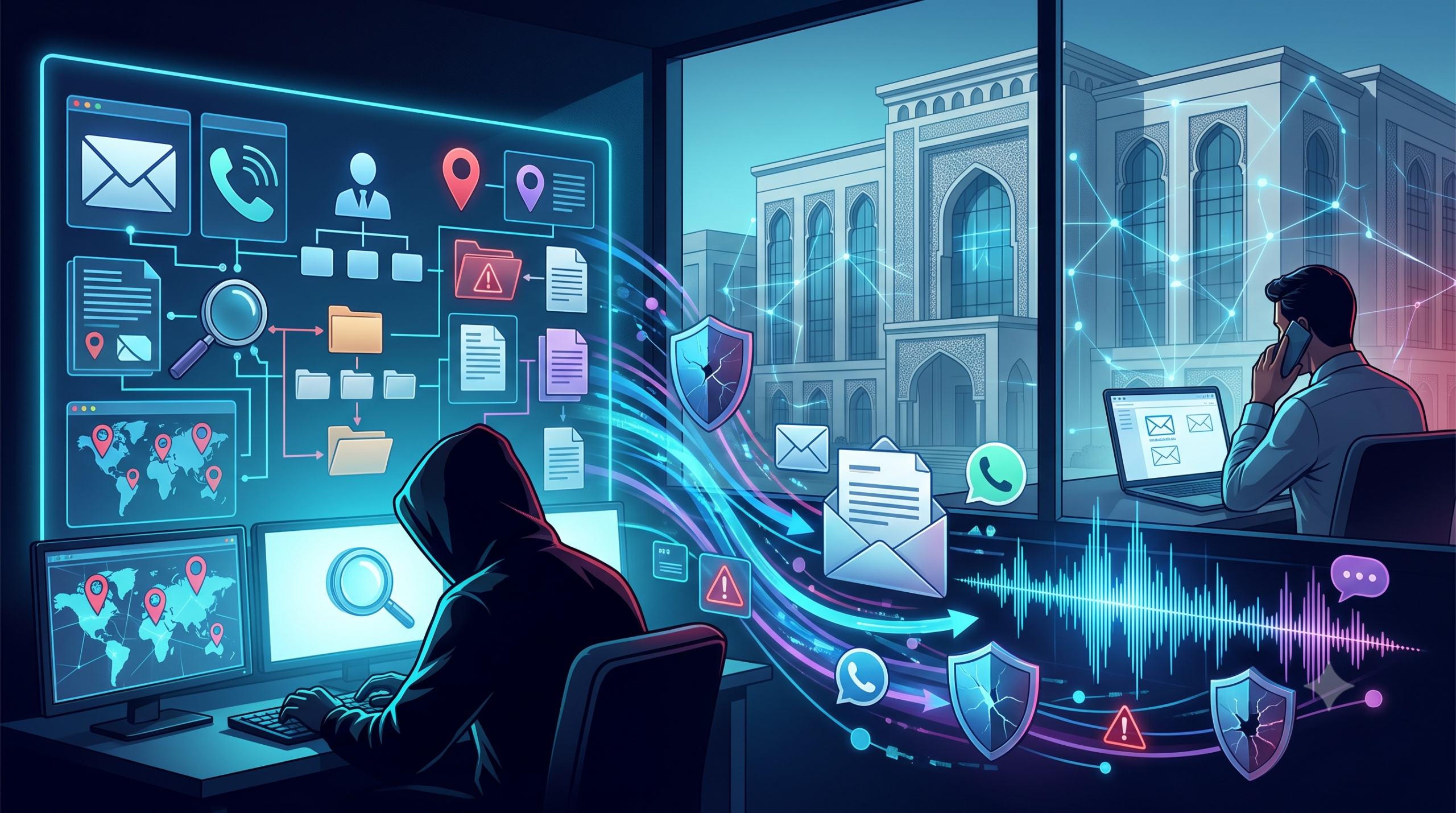
A threat actor has claimed to have leaked information allegedly belonging to Iraq’s Anti-Money Laundering Office (AML Iraq), an organization responsible for supporting efforts to combat money laundering and terrorist financing in cooperation with financial institutions and law enforcement agencies.
According to a post published on a cybercrime forum, the alleged information includes office contact details, email addresses, phone numbers, physical location information, and links to document directories hosted on the organization’s website.
At the time of publication, there is no independent evidence confirming that the organization has been compromised. Some of the information referenced in the claim may already be publicly accessible. Until additional evidence becomes available, the incident should be treated as an unverified allegation rather than a confirmed data breach.
Regardless of whether the claim is verified, the incident highlights an important cybersecurity lesson. Information that is publicly available can still be valuable to cybercriminals when it is collected, organized, and analyzed. Security professionals refer to this collection of publicly accessible information as an organization’s digital footprint, while the process of gathering it is known as Open-Source Intelligence (OSINT).
Attackers commonly use OSINT to identify employees, organizational structures, email addresses, phone numbers, office locations, and other publicly available details before launching phishing, social engineering, or other targeted attacks.
This is not only a concern for government agencies. The same techniques are widely used against private companies, financial institutions, healthcare organizations, universities, and businesses of all sizes.
The growing use of artificial intelligence has further increased these risks. Publicly available contact information can now be combined with AI-powered tools to create highly convincing phishing emails, impersonation phone calls, and even voice-cloning scams that appear to come from trusted colleagues, executives, or partner organizations.
Organizations are encouraged to regularly review the information they publish online, remove unnecessary publicly accessible content, monitor their digital footprint, and provide employees with regular cybersecurity awareness training to help them recognize phishing and social engineering attempts.
This incident serves as a reminder that cybersecurity is not only about protecting confidential information. Publicly available data can also become a valuable resource for attackers when combined with other information and used as part of a targeted cyberattack.