
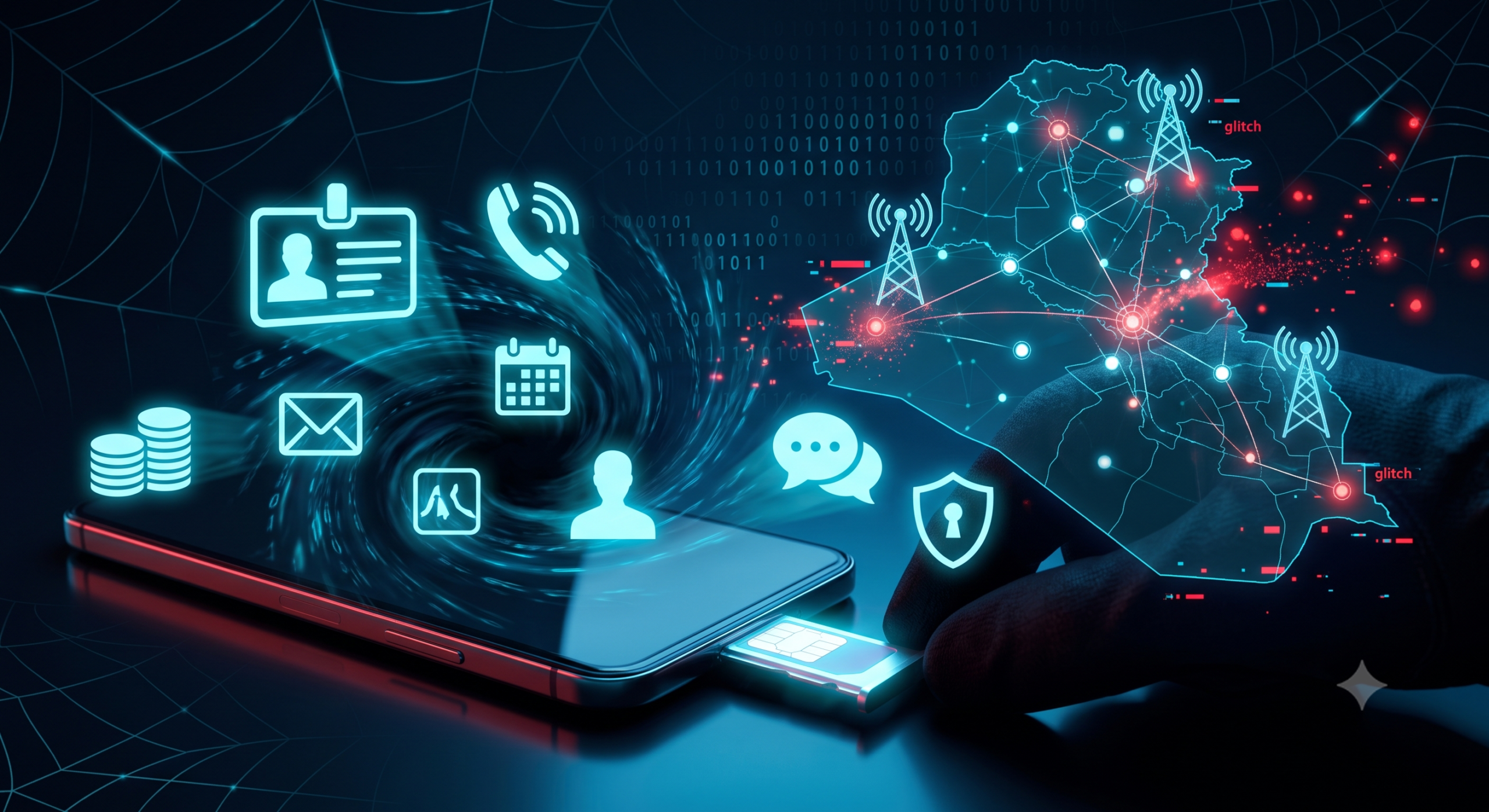
Imagine receiving a phone call from someone who already knows your name, mobile number, date of birth, and ID number. Many people would naturally trust that caller. That is exactly why personal information has become one of the most valuable assets for cybercriminals.
A threat actor has advertised databases on an underground forum, claiming they are associated with Asiacell and Zain Iraq, two major telecommunications providers. According to the visible sample, the alleged datasets appear to contain names, professions, phone numbers, dates of birth, and ID card numbers.
At this stage, there is no independent evidence confirming that the advertised databases are authentic or that either company has been breached. The available screenshots alone are not enough to verify the claim, so it should currently be treated as an unverified underground marketplace advertisement.
Whether this claim proves to be true or not, it highlights an important cybersecurity lesson. Mobile phone numbers are no longer just contact details. They are linked to online banking, password recovery, one-time verification codes (OTPs), and many of our most important digital accounts. If this information falls into the wrong hands, it can be used for phishing, identity theft, account takeover attempts, and other social engineering attacks.
One of the most significant risks is SIM swap fraud. In this attack, criminals impersonate a customer during identity verification and attempt to convince a telecommunications provider to transfer the victim’s phone number to a SIM card under their control. If successful, they can receive OTPs and other security messages intended for the victim, potentially gaining unauthorized access to banking, email, and other online accounts.
How to Protect Yourself
- Be cautious of unexpected phone calls, SMS messages, or emails requesting personal information, even if the sender already knows details about you.
- Never share one-time verification codes (OTPs) with anyone claiming to represent your telecom provider, bank, or another organization.
- Watch for unexpected loss of mobile service. If your phone suddenly displays “No Service” in an area where you normally have coverage, contact your telecommunications provider immediately, as this could indicate a SIM swap attempt.
- Verify suspicious requests by contacting organizations through their official customer service channels rather than using contact details provided in unsolicited messages.
- Enable multi-factor authentication whenever possible and regularly review your important accounts for unusual activity.
Although this reported database sale remains unverified, it serves as an important reminder that personal information is a valuable commodity in underground cybercrime markets. Cybercriminals do not always need to hack your device—sometimes they only need enough information to convince others that they are you. Staying informed, recognizing warning signs, and responding quickly are among the most effective ways to protect your digital identity.