
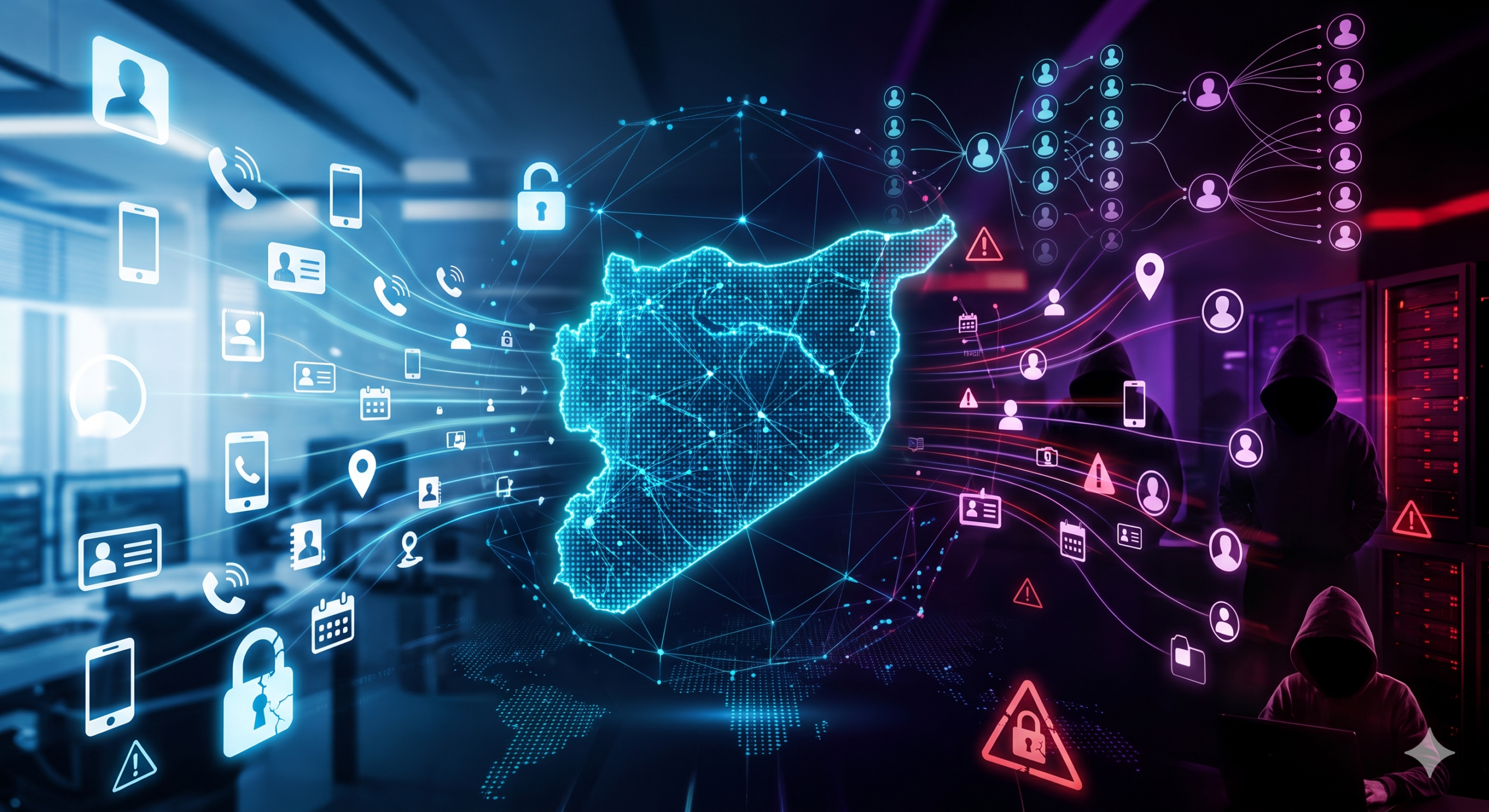
A threat actor is advertising what they claim is a large database containing personal information linked to Syrian Facebook users. Although the authenticity of the advertised dataset has not been independently verified, the incident highlights an important cybersecurity reality: personal information remains one of the most valuable assets for cybercriminals, whether it comes from recent breaches, historical data exposures, or publicly available online sources.
According to the advertisement, the alleged dataset includes names, mobile phone numbers, birth dates, gender, locations, Facebook User IDs, profile links, and other profile information.
One detail immediately stands out. The seller claims the database contains approximately 1.15 billion records, while Syria’s population is estimated at around 24 million people.
At first glance, this may seem impossible. However, the advertisement refers to records, not individuals. A single person can generate multiple records through duplicate entries, multiple phone numbers, profile updates, location changes, historical information, and data collected from different sources over many years. This is a reminder that eye-catching numbers should be examined critically rather than accepted at face value.
At this stage, there is no independent confirmation that the dataset is authentic, where it originated, or whether it contains the information claimed by the seller. The advertisement also states that the data was aggregated from multiple historical sources instead of being stolen during one recent cyberattack. In other words, it may represent information collected over time and combined into a single database.
Whether this dataset proves to be genuine or not, it reflects a growing cybercrime trend. Threat actors increasingly collect, combine, and trade personal information from multiple sources to build detailed digital profiles of potential victims. Even information that appears harmless on its own can become valuable when combined with previously exposed data or publicly available information using Open-Source Intelligence (OSINT) techniques. This allows attackers to verify identities, identify relationships, and create more convincing phishing emails, text messages, phone calls, and other social engineering attacks.
The more information cybercriminals have, the easier it becomes to impersonate trusted organizations, attempt account takeovers, commit identity theft, conduct financial fraud, and launch targeted scams. The risks extend beyond individuals to businesses, educational institutions, humanitarian organizations, and government agencies that communicate with Syrian citizens.
While the authenticity of this advertised dataset remains unverified, the cybersecurity lessons are clear. Regularly review the personal information you share online, update your privacy settings, enable multi-factor authentication, use strong and unique passwords, and remain cautious of unexpected communications that reference your personal details.
Cybersecurity is not only about responding to attacks. It is also about understanding how personal information can be collected, combined, and exploited over time. Developing the habit of questioning extraordinary claims, verifying information before accepting it as fact, and protecting your digital identity are among the most effective ways to reduce cyber risk.