
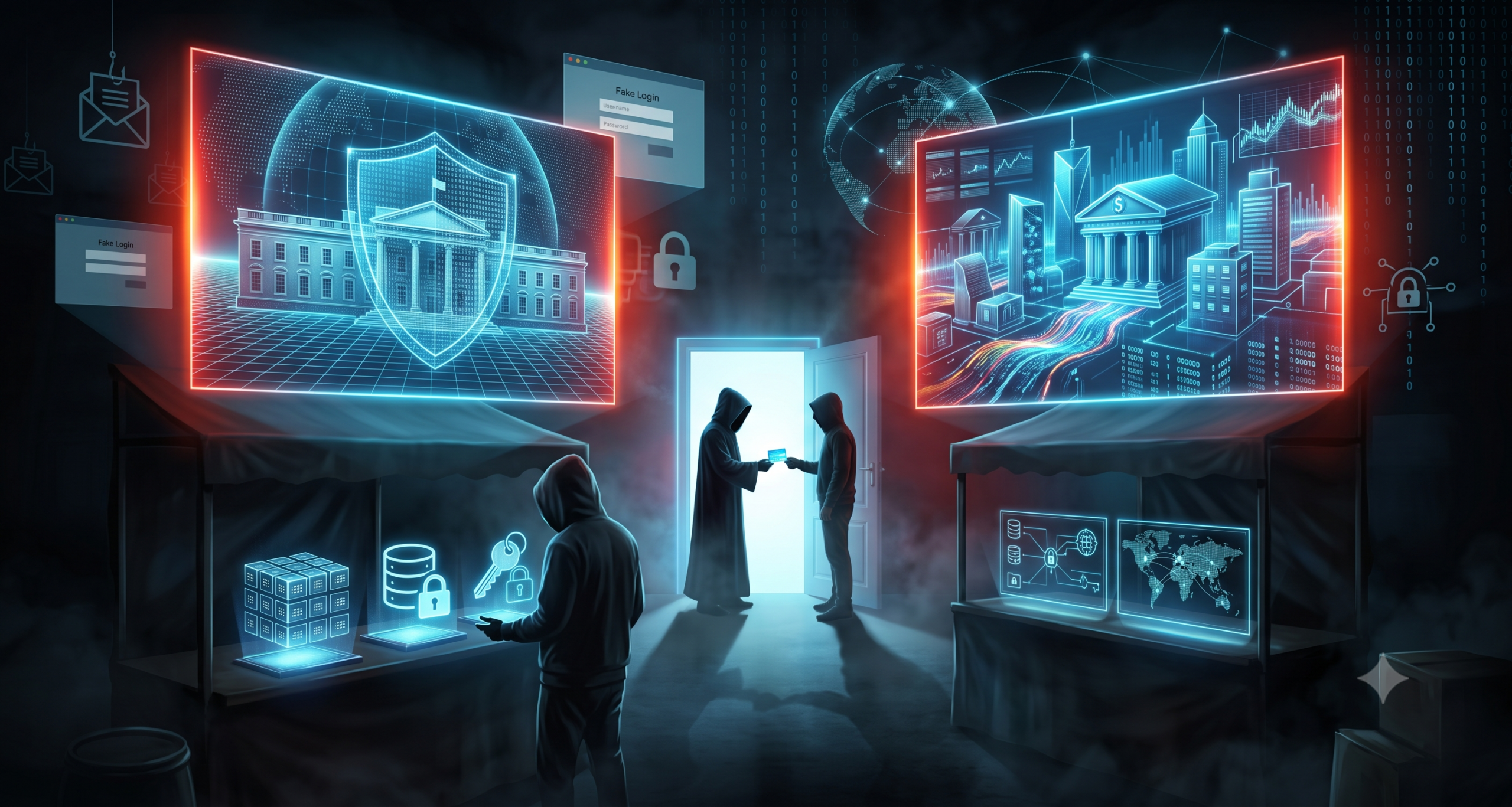
Recent activity on an underground cybercrime forum has drawn attention after threat actors advertised an alleged database belonging to the UAE Ministry of Interior and separately claimed to be selling unauthorized access to the systems of a UAE financial technology (FinTech) company.
At the time of publication, no official authority has confirmed either claim. Both reports should therefore be treated as unverified allegations until investigations by the affected organizations or relevant authorities are completed.
Although claims posted on cybercrime forums are not always genuine, cybersecurity professionals monitor them because they can provide early warning of emerging threats and reveal evolving criminal tactics.
Why Do These Claims Matter?
Cybercrime forums have become underground marketplaces where criminals advertise stolen data, credentials, and unauthorized access. While some claims are genuine and others are false or exaggerated, they can help security teams identify potential threats before incidents are officially confirmed.
One of the most valuable commodities sold on these forums is “Access for Sale.” This means an attacker claims to have gained unauthorized access to an organization’s systems and is offering that access to other cybercriminals.
Think of a burglar who specializes in unlocking doors. Instead of stealing anything, the burglar sells the unlocked door to another gang that carries out the robbery. In cybersecurity, these criminals are known as Initial Access Brokers (IABs), and many ransomware attacks begin this way.
Initial access often starts with a phishing email, a weak or reused password, an exposed remote access service, or an unpatched vulnerability. Once inside, attackers may keep the access or sell it.
Government organizations are attractive targets because they hold sensitive citizen information and deliver essential public services, while FinTech companies process financial transactions and protect valuable customer data.
Even if these claims prove false, criminals may still exploit the attention by launching phishing campaigns, fake websites, or fraudulent emails designed to steal credentials and personal information.
How Can You Protect Yourself?
- Verify breach reports through official announcements before accepting them as fact.
- Be cautious of emails, messages, or phone calls referencing alleged breaches.
- Enable Multi-Factor Authentication (MFA), use strong, unique passwords, and install security updates promptly.
- Organizations should monitor threat intelligence, investigate credible claims quickly, and maintain a tested incident response plan.
The Bottom Line
Not every claim posted on a cybercrime forum is true—but not every claim is false. The best defense is to stay informed, verify information through trusted sources, and maintain strong cybersecurity practices. Early awareness, careful verification, and timely action remain the strongest defenses against both cyberattacks and the misinformation that often surrounds them.